


The doctor is in: honest answers to your orthopedic questions
Welcome to a space where everyday joint, bone, and muscle concerns get clear medical explanations directly from an orthopedic surgeon. Got a question about an ache, injury, or surgery? Ask away.
Demystifying orthopedics for everyone
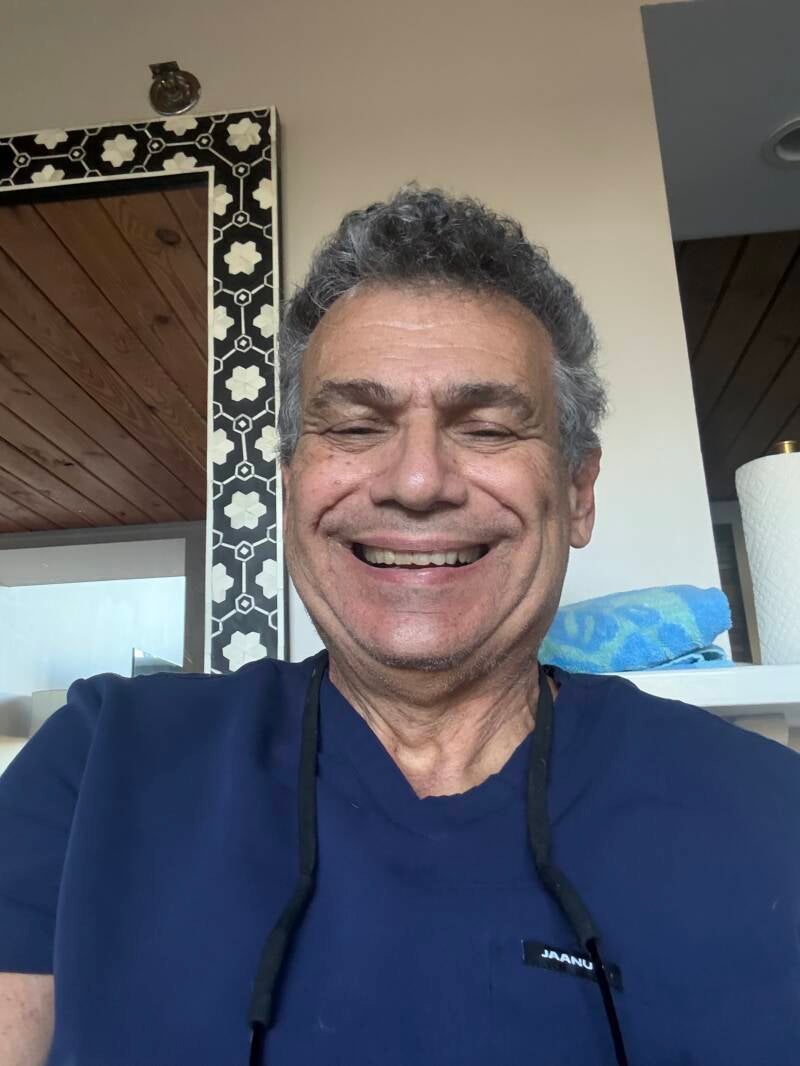
Medical jargon can make dealing with joint pain, sports injuries, or arthritis feel overwhelming. I started this blog to bridge the gap between doctor and patient, translating complex musculoskeletal topics into practical, understandable guidance anyone can use.
Anyone can submit an orthopedic question. Whether you are curious about knee arthroscopy, recovering from a rotator cuff strain, or wondering when to seek care, I address your real-world questions with evidence-based insights.
Recent answers and articles
Explore answers to recent community inquiries alongside in-depth guides on mobility, surgical recovery, joint preservation, and everyday bone health. Check back regularly for new patient-submitted topics and insights.
Question from Melissa
How do I treat a frozen shoulder?
Dear Melissa,
Thank you for your question
Adhesive Capsulitis of the Shoulder (Frozen Shoulder)
Adhesive capsulitis, commonly known as frozen shoulder, is a condition that causes pain and stiffness in the shoulder joint. Because the shoulder is designed to move freely, prolonged limitation of movement can lead to significant stiffness and loss of function.
Frozen shoulder often develops after a shoulder injury causes pain and discourages normal use of the arm. A common underlying issue is a rotator cuff injury, which may range from mild rotator cuff tendinitis to a partial or complete tear. When pain limits shoulder movement, scar tissue can develop between the humeral head (the ball of the upper arm bone) and the glenoid (the shoulder socket). Over time, this loss of motion can lead to adhesive capsulitis.
In many cases, a frozen shoulder develops when an initial shoulder problem is treated by limiting movement for too long. While rest may be necessary after an injury, avoiding active movement of the arm can create a secondary problem: stiffness and scar tissue within the shoulder joint.
An orthopedic surgeon can evaluate your shoulder and measure your range of motion. One simple way to assess movement is to lie on your back with your elbows tucked at your sides, then rotate your forearms outward. Limited external rotation is a common sign of frozen shoulder. Internal rotation may also be restricted; for example, you may be unable to reach as high behind your back with the affected arm as you can with the opposite shoulder.
Another assessment involves stabilizing the scapula, or shoulder blade, while raising the arm. Normally, the shoulder should be able to elevate to a right angle without excessive movement of the shoulder blade. With frozen shoulder, people often compensate by moving the scapula rather than moving through the shoulder joint itself.
A diagnostic workup for frozen shoulder typically includes X-rays taken in the orthopedic surgeon's office, as well as an MRI to evaluate the rotator cuff and other internal shoulder structures. Patients may initially use a sling to manage inflammation or pain from a rotator cuff injury; however, prolonged immobilization can contribute to frozen shoulder. If the MRI reveals structural damage, such as a torn rotator cuff or torn labrum, surgical repair may be recommended.
Aggressive physical therapy is the primary treatment for frozen shoulder. Most patients require two to three months of therapy to improve motion. Reducing inflammation with an injection or medication may also help relieve pain and support progress in therapy.
If shoulder motion does not improve with conservative treatment, surgery may be the next step. The goal is to release the scar tissue and restore movement. This may be done under general anesthesia through manipulation of the shoulder, in which the shoulder is carefully moved through external rotation, internal rotation, and abduction to break up adhesions. Alternatively, the procedure can be performed arthroscopically using a small camera and specialized instruments to release scar tissue under direct visualization. Aggressive physical therapy is essential after surgery to help prevent scar tissue from reforming.
J Wilson. Writes about her disappointment in the handling of her daughters workman's compensation case. Specifically, the delay in obtaining an MRI.
Dear Jean,
thank you for the question. So sorry to hear about your daughters hard time in obtaining an MRI to establish a diagnosis for her back pain radiating down her leg.
It can be difficult getting authorization for care in workers compensation cases. I hear it all the time. However, there is a solution to your problem. There are medical care companies that specialize in the care of workers compensation and personal injury ( auto accidents, falls ets ) that will handle the entirety of your daughter's care. They even own their own MRI machines. It also sounds like your daughter needs to hire a workers compensation lawyer who will be her advocate. I hope this helps. Good luck !
Click here to add text.
Educational purposes only
All information, content, and material presented on this blog is intended solely for general informational and educational purposes. Reading responses or submitting questions does not replace professional diagnostic evaluations or individualized clinical care.
Empowering your health through understanding
Knowledge is key when making decisions about your body. While this blog provides educational information rather than individualized medical diagnosis, it offers the foundation you need to have meaningful conversations with your personal healthcare team.
